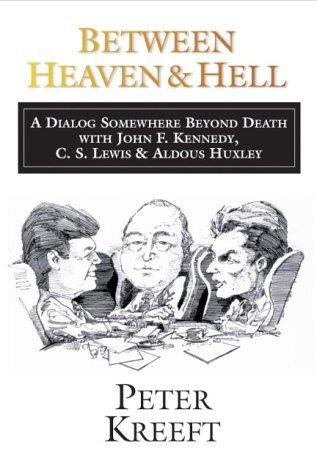
President John F. Kennedy, C.S. Lewis, and Aldous Huxley died on the same day, the assassination of the former overshadowing the other two.


Jorge Luis Borges, in his short essay, El culto del libro , writes that a watershed moment in the history of human thought is when St. Augustine found that St. Ambrose could read a text without moving his lips or reading aloud. Being a man of the world, one could only assume that St. Augustine found this to be an unusual skill. But to be mentioned in St. Augustine’s Confessions, it has to be more significant than just a cheap parlor trick. Borges explains:
Aquel hombre pasaba directamente del signo de escritura a la intuición, omitiendo el signo sonoro; el extraño arte que iniciaba, el arte de leer en voz baja, conduciría a consecuencias maravillosas. Conduciría, cumplidos muchos años, al concepto del libro como fin, no como instrumento de un fin.
(That man passed directly from the written sign to the intuition, omitting the audible sign; the strange art that it initiated, the art of reading to oneself, would lead to marvelous consequences. It would lead, after many years, to the concept of the book as an end, and not a means to an end.)


The Church observes the birth of John as in some way sacred; and you will not find any other of the great men of old whose birth we celebrate officially. We celebrate John’s, as we celebrate Christ’s. This point cannot be passed over in silence, and if I may not perhaps be able to explain it in the way that such an important matter deserves, it is still worth thinking about it a little more deeply and fruitfully than usual.
John is born of an old woman who is barren; Christ is born of a young woman who is a virgin. That John will be born is not believed, and his father is struck dumb; that Christ will be born is believed, and he is conceived by faith.
I have proposed some matters for inquiry, and listed in advance some things that need to be discussed. I have introduced these points even if we are not up to examining all the twists and turns of such a great mystery, either for lack of capacity or for lack of time. You will be taught much better by the one who speaks in you even when I am not here; the one about whom you think loving thoughts, the one whom you have taken into your hearts and whose temple you have become.
John, it seems, has been inserted as a kind of boundary between the two Testaments, the Old and the New. That he is somehow or other a boundary is something that the Lord himself indicates when he says, The Law and the prophets were until John. So he represents the old and heralds the new. Because he represents the old, he is born of an elderly couple; because he represents the new, he is revealed as a prophet in his mother’s womb. You will remember that, before he was born, at Mary’s arrival he leapt in his mother’s womb. Already he had been marked out there, designated before he was born; it was already shown whose forerunner he would be, even before he saw him. These are divine matters, and exceed the measure of human frailty. Finally, he is born, he receives a name, and his father’s tongue is loosed.
Zachary is struck dumb and loses his voice, until John, the Lord’s forerunner, is born and releases his voice for him. What does Zachary’s silence mean, but that prophecy was obscure and, before the proclamation of Christ, somehow concealed and shut up? It is released and opened up by his arrival, it becomes clear when the one who was being prophesied is about to come. The releasing of Zachary’s voice at the birth of John has the same significance as the tearing of the veil of the Temple at the crucifixion of Christ. If John were meant to proclaim himself, he would not be opening Zachary’s mouth. The tongue is released because a voice is being born – for when John was already heralding the Lord, he was asked, Who are you and he replied I am the voice of one crying in the wilderness.
John is the voice, but the Lord in the beginning was the Word. John is a voice for a time, but Christ is the eternal Word from the beginning.


