Tuesday, December 28, 2010

Wassail Wassail Mannheim Steamroller


1. Wassail! wassail! all over the town,
Our toast it is white and our ale it is brown;
Our bowl it is made of the white maple tree;
With the wassailing bowl1, we'll drink to thee.2

2. Here's to our horse, and to his right ear,
God send our master a happy new year:
A happy new year as e'er he did see,
With my wassailing bowl I drink to thee.

3. So here is to Cherry and to his right cheek
Pray God send our master a good piece of beef
And a good piece of beef that may we all see
With the wassailing bowl, we'll drink to thee.

4. Here's to our mare, and to her right eye,
God send our mistress a good Christmas pie;
A good Christmas pie as e'er I did see,
With my wassailing bowl I drink to thee.3

5. So here is to Broad Mary and to her broad horn
May God send our master a good crop of corn
And a good crop of corn that may we all see
With the wassailing bowl, we'll drink to thee.

6. And here is to Fillpail and to her left ear
Pray God send our master a happy New Year
And a happy New Year as e'er he did see
With the wassailing bowl, we'll drink to thee.

7. Here's to our cow4, and to her long tail,
God send our master us never may fail
Of a cup of good beer5: I pray you draw near,
And our jolly wassail it's then you shall hear.

8. Come butler, come fill us a bowl of the best
Then we hope that your soul in heaven may rest
But if you do draw us a bowl of the small
Then down shall go butler, bowl and all.

9. Be here any maids? I suppose here be some;
Sure they will not let young men stand on the cold stone!
Sing hey O, maids! come trole back the pin,
And the fairest maid in the house let us all in.

10. Then here's to the maid in the lily white smock
Who tripped to the door and slipped back the lock
Who tripped to the door and pulled back the pin
For to let these jolly wassailers in.

THE BOAR´S HEAD / HERE WE COME A WASSAILING-Christmas Carol-Villancico

Saturday, December 25, 2010

Today the Virgin Gives Birth... (Kontakion of the Nativity, Znamenny chant)


"Today the virgin gives birth to him who is above all being, and the earth offers a cave to him whom none can approach. Angels with shepherds give glory, and magi journey with a star. For to us, there has been born a little child, God before all ages."

Westminster Cathedral Choir - Music for Christmas(Palestrina)


Hodie Salvator apparuit;
hodie in terra canunt angeli,
lætantur archangeli;
hodie exsultant iusti, dicentes:
Gloria in excelsis Deo, alleluia.

Monday, December 06, 2010

Monday, November 22, 2010

Forty-Seven Years Ago Today

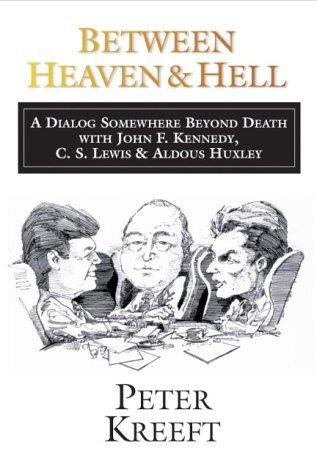
http://photos1.blogger.com/blogger/7410/1245/1600/bhh.jpg

President John F. Kennedy, C.S. Lewis, and Aldous Huxley died on the same day, the assassination of the former overshadowing the other two.

Friday, November 19, 2010

On Creation and the Music of the Spheres


God created the heavens and the earth, but not only half-He created all the heavens and all the earth, creating the essence with the form. For he is not an inventor of figures, but the creator even of the essence of beings.-St. Basil of Caesarea, The Hexameron


But the soul receives the sweetest harmonies and numbers through the ears, and by these echoes is reminded and aroused to the divine music which may be heard by the more subtle and penetrating sense of mind. According to the followers of Plato, divine music is twofold. One kind, they say, exists entirely in the eternal mind of God. The second is in the motions and order of the heavens, by which the heavenly spheres and their orbits make a marvellous harmony. In both of these our soul took part before it was imprisoned in our bodies. But it uses the ears as messengers, as though they were chinks in this darkness. By the ears, as I have already said, the soul receives the echoes of that incomparable music, by which it is led back to the deep and silent memory of the harmony which it previously enjoyed. The whole soul then kindles with desire to fly back to (Fruatur, ad sedes) its rightful home, so that it may enjoy that true music again.-Marsilio Ficino, De divino furore (On Divine Frenzy)

Thursday, November 11, 2010

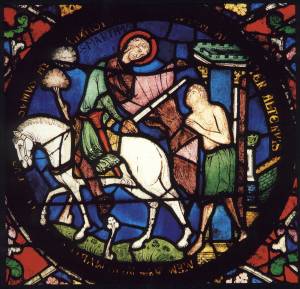
St. Martin of Tours


 St. Martin of Tours
Image credit


On this Armistice Day, we honour a saint who had been a soldier of the Roman Army, and whose life gained greater fame as Christ's soldier, as a missionary bishop in a hostile Gallic land.


O man of worth past telling, whom labour could not conquer, nor death discomfit; who neither feared to die, nor refused to live. -Third Antiphon for Lauds for the Feast of St. Martin of Tours, from the Monastic Diurnal

Here's his vita from The Golden Legend

Tuesday, November 02, 2010

Wednesday, October 27, 2010

The Late, Great Sobran on Patriotism vs. Nationalism

from The Western Confucian


 The Late Joseph Sobran hits the mark on an issue I have written about before. Here it is, in his own words:

Patriotism is like family love. You love your family just for being your family, not for being “the greatest family on earth” (whatever that might mean) or for being “better” than other families. You don’t feel threatened when other people love their families the same way. On the contrary, you respect their love, and you take comfort in knowing they respect yours. You don’t feel your family is enhanced by feuding with other families.

While patriotism is a form of affection, nationalism, it has often been said, is grounded in resentment and rivalry; it’s often defined by its enemies and traitors, real or supposed. It is militant by nature, and its typical style is belligerent. Patriotism, by contrast, is peaceful until forced to fight.

The patriot differs from the nationalist in this respect too: he can laugh at his country, the way members of a family can laugh at each other’s foibles. Affection takes for granted the imperfection of those it loves; the patriotic Irishman thinks Ireland is hilarious, whereas the Irish nationalist sees nothing to laugh about.

The nationalist has to prove his country is always right. He reduces his country to an idea, a perfect abstraction, rather than a mere home. He may even find the patriot’s irreverent humor annoying.


Wednesday, October 20, 2010

All Saints Day

An old article by Huw Raphael

IZ THAT Time of the year again when many folks will gang up on – really – those who let their kids dress up silly on 31 October. We will be bombarded with bad history and bad social science and bad theology. I won’t even bother to link to the most common Christian “proof sheet” that takes the Irish name of the holiday (Samhain) and makes it into a god’s name – a god to whom human sacrifices were offered. This deity never existed. Samhain is simply Irish gaelic meaning “End of Summer”. It is still the name of the Month of November in the Irish language. I will also not bother to link to sources produced by Modern Neopagans who get their history all wrong, too. This holiday was not stolen by the Church from them. Firstly because their patterns are modern – based on a Christian culture – so their patterns are not the “real, ancient practice” of any people. Secondly because their ancient feasts were not celebrated on fixed calendars. After ten-plus years as a pagan and twenty plus years as a Christian I’m just annoyed by all the politically-biased claims out there. Maybe some totally non-caustic and totally non-National Enquirer-worthy research and experience can add a little leaven to the discussion (doubt it).

Read the rest here.

Tuesday, October 19, 2010

Barbara Billingsley, +Requiescat in Pace

The Beaver's mother passed last Friday. +May her memory be eternal!!!

Here's a clip from the comedic film "Airplane" (1980), where she is...well...talking jive:


Impressive! I must say I only talk jive in Latin.

+May she rest in peace!

Hat tip: John Beeler

"Kids Today": Gavin McInnes on Today's Youth culture and Boomer Hypocrisy

From Taki's Mag

I have always been a bit of a "fogey": from my late teens to about 35 I could qualify as a "young fogey," and now that I'm settling into middle-age fogeyhood, it won't be long before the adjetive "old" will apply. The common denominator, of course, is "fogey."

My taste in clothing has always ranged between 1925 and 1960. I prefer wearing fedoras and donegals depending on what suit or tweed coat I'm wearing, and my "casual" clothes are casual by 1945-1955 standards: button-down shirts, sweaters (depending on the weather), . My taste in music ranges between Gregorian and Byzantine/Slavic chant and Renaissance sacred polyphony, to Bach, Handel, Mozart, Beethoven and Haydn, with a good rendezvous through the Big Bands: Glenn Miller, Benny Goodman, and Duke Ellington. I also have a good, soft spot for Cole Porter.

But I also have some interest in what my students are up to. My students tend to be conservative, but by far not unaffected by contemporary youth culture (college coeds all) and articles like this one by Gavin McInnes peak my interest.

For the most part, he is spot-on. Many Boomer "critics" of modern youth culture complain about how "kids today" are so "materialistic" and "culturally void," but in reality they're just pursuing the same things they did: sex, more sex, some drugs, more sex, music, sex, music, more music, and then more sex. They are about what youth movements since the sixties have always been about.

This gem is my favorite from Mr. McInnes' article. He, as a participant in a panel discussion at UCLA on youth culture, tears into Professor Corey's own presentation, "The History of Cool," where she talks about the "White Negro," "Bourgeois" appropration of  lower class culture, and how youth culture has (again, bourgeois in it's essence" has always been stealing from the poor. Here's where he let's her have it:

"I interrupted her by asking if there was anything more bourgeois than being a professor—being paid to pontificate about leisure movements and then taking off every seventh year to go ruminate in Paris. Hearing today’s kids called mindless consumers drives me nuts. They get their clothes at secondhand shops, and the ones they do buy have fewer logos than when I was their age. They don’t buy music. They steal it. They can create their own band out of nothing by mixing samples and genres and new instruments, and they get these songs to their fans without a record label. They’re not stealing anything from blacks. They are black. Mailer’s essay is a half-century old, and today’s incarnation of cool is more inclusive than any before it. We all know how misogynist the hippies really were. The Free Love movement was only a groovy way to take advantage of women. Punk pretended to be open to everyone, but an Afro Mohawk was about as common as a well-respected white rapper. Today’s kids couldn’t care less who’s black, gay, rich, or poor.

Spot on, indeed!

Read the whole article here.